John M. Grondelski
Advent means “coming” or “arrival.” It is the season preceding Christmas, encompassing at least the four Sundays prior to December 25. (I say “at least” because, as you may notice this year, the “Fourth Week” of Advent is actually only the Fourth Sunday of Advent, as Christmas falls on a Monday.) The “four weeks” of Advent allude to the four thousand years that were literally attributed to the interval between the fall of Adam and the birth of Jesus Christ.
When most Catholics talk about Advent, they speak of it as “preparation for Christmas.” That’s not necessarily wrong, inasmuch as celebration of the commemoration of the Nativity of the Lord requires preparation.
But let’s recognize that, in commemorating Christ’s Nativity, we are in fact remembering a past event. Jesus was born over two thousand years ago.
When we look at how Advent is structured, the truth is that the focus on Jesus’ birth becomes predominant only in the season’s last nine days-i.e., December 16-24. That’s when the Gospels specifically center on the historical birth of Jesus in Bethlehem. That’s when the Preface used for Mass speaks most directly to the historical nativity of Christ.
The greater part of Advent-the 13-18 days (depending on when Advent starts) preceding December 16-is not focused on Jesus’ first coming in Bethlehem. It is focused on his second coming at the end of time.
Advent opens with an eschatological focus. In that sense, it continues the eschatological focus of the last weeks of Ordinary Time. The Thirty-Third Sunday of Ordinary Time and the First Sunday of Advent always have a judgment motif, either the Lord’s return at the end of time (Ordinary Time) or the need for watchfulness and sober readiness for that coming (Advent). The Solemnity of Christ the King hinges them together: Jesus is King of the Universe.
We need to be preparing not for a past event, but a future one. That’s why, at every Mass, after the Our Father, the priest prays that we be delivered from evil to await Jesus’ return in “joyful hope.”
I’ve been asked whether Advent is still a “penitential season.” At one time, it clearly was, though some people today are confused. Yes, the priest’s vestments are purple, a penitential color. But some of the spiritual exercises of yesteryear-missions, retreats, extended confession hours—seem to have disappeared. And if you ask a canon lawyer, he’ll tell you that the Church’s penitential times are “every Friday of the whole year and the season of Lent” (CIC 1250).
Well, solid Catholic spirituality starts with good Catholic theology, not canon law. Law exists to serve the faith and its appropriation by Catholics. So, is Advent still a “penitential season”?
It is, in the sense that all times are penitential times. The Catholic is called to constant conversion. Conversion is an ongoing aspect of the Christian life. There are times in our life when conversion may have a greater focus and others when it has a lesser focus, but there is no time when attention to conversion can be absent. Jesus calls us to “be perfect as your heavenly Father is perfect” (Matt. 5:48), a constant task. So, yes, to the degree that we are all affected by sin (and we all are to a greater or lesser degree), in that measure, we also are all called to conversion.
But the conversion we are called to in Advent has a distinctive character: one of “joyful hope.” A Catholic living Advent today is in a better position than Messianic prophets like Isaiah and Micah: he knows how the story turned out in Jesus of Nazareth. At the same time, today’s Catholic also knows how the story will turn out: the triumph of God and goodness, “when everything is subjected to him . . . so that God may be all in all” (1 Cor. 15:28). We know that God, who will come to judge the living and the dead, will prevail. The only thing we do not know is on which side we will be in that judgment: among the sheep or the goats.
That is why Advent is a time of preparation and conversion: it is a time to make myself ready “for the coming of our Savior, Jesus Christ,” judge of the living and the dead, King of the Universe. The way I prepare myself is through conversion of heart, from turning from creatures to the Creator, from sin to grace. So pastors should restore some of the old Advent staples, like a parish mission, or at least extended hours for sacramental penance.
The liturgical calendar is not intended to be a re-enactment of the life of Christ. Rather, it is intended systematically, year after year, to lead us through the high points of the life of Christ, from his birth to his resurrection, ascension, and sending of the Holy Spirit. Obviously, Jesus is not born every December 25.
The liturgical calendar is similar to the rosary. Throughout the year, meditating on the mysteries of the rosary leads us through the most important events of Jesus’ life, death, and resurrected life. All those events retain a constant relevance for the Christian: that’s why we commemorate the glorious mysteries in Lent and the sorrowful mysteries in Eastertide. There is one, integral life of Christ that remains the normative measure for every Christian. Whether we meditate on them in the rosary or observe them through the course of the liturgical year, the motif should be the same: how these elements of his life shape ours.
Advent reminds us of what Jesus did for us so that, “now” (that little word we repeat in every Hail Mary), we may, by the prayers of Mary and all the saints, turn from whatever separates us from God and to God himself. Advent reminds us that “now” is the only moment we actually have and are promised, as we have no guarantees of our future. So we seize the moment of grace, the kairos that is “now,” to prepare for him who, by his past coming, made us aware he is coming back and that “my reward is with me, and I will give to each person according to what he has done” (Rev. 22:12).
What is our response, for which we prepare during Advent and our entire lives? The very last words of the Bible: “Come Lord Jesus!” (Rev. 22:20). Maranatha!

The best definition for love according to St. John is that God is love.If so, as people created in the likeness of God, we are also people of love. We are created to love and receive love also. Perfect love…

Marriage relationship is based on love. Love in itself is compassionate and expressive, showing care and understanding of the person we love. Bearing this in mind, one wonders what happens when love in marriage relationships become sour.
With experience,…
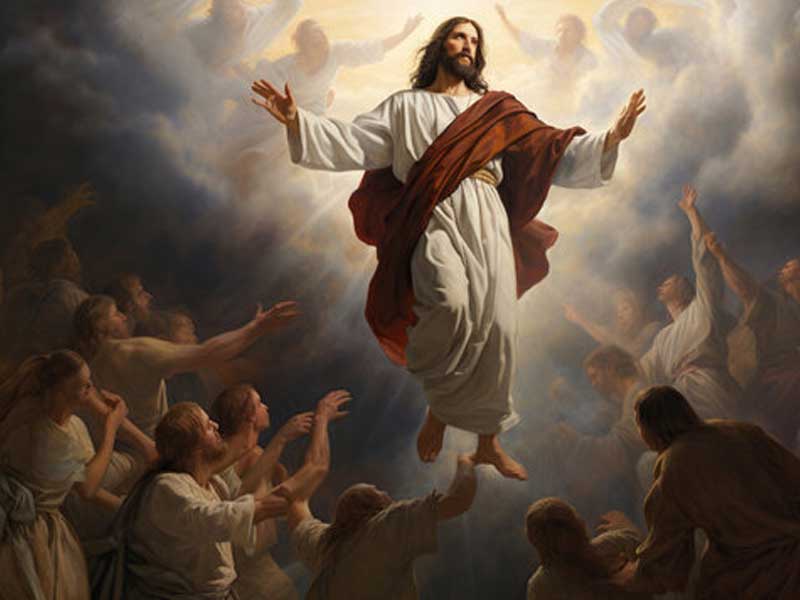
Forty days after his Resurrection, Jesus ascended into heaven. During this period between his Resurrection and Ascension, He actually gave…
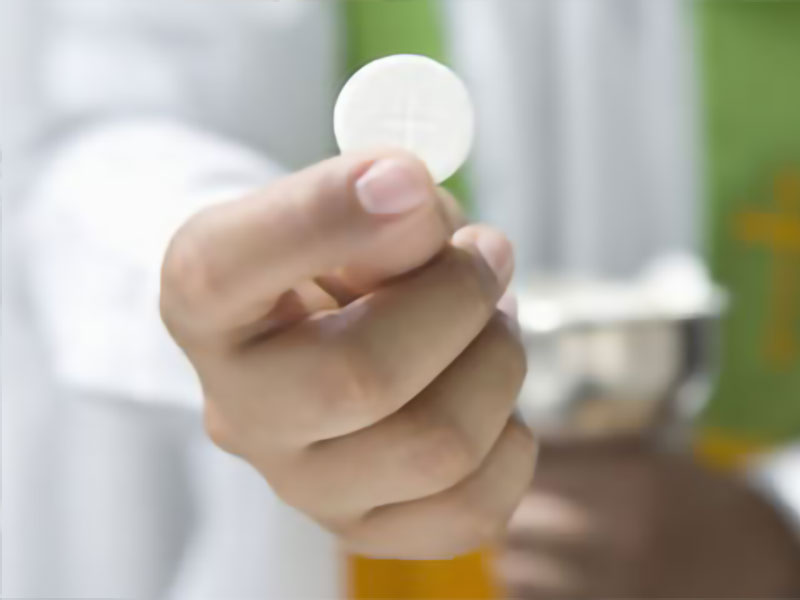
Protestant attacks on the Catholic Church often focus on the Eucharist. This demonstrates that opponents of the Church-mainly Evangelicals and…

In many news stories these days, reporters use the words “executive compensation,” “deregulation,” and “profits” in pejorative, unflattering terms. In…
“Unless the Lord build the house, they labor in vain who build…” (Psalm 127:1).
“Children’s children are the crown of the…

“Once an alcoholic, always an alcoholic.”
Right?
“Once a liar, always a liar.”
Right?
Well, according to the wisdom of this…




© 2002- The Beacon International Catholic Magazine. All Rights Reserved
Another Mc.Rufus Interactive / CouchCMS Design











.jpg)